Stari Most
The stone arch over the Neretva and Mostar's main landmark.

The stone arch over the Neretva and Mostar's main landmark.

Copper shops, souvenirs, and the old bazaar lane by the bridge.

A classic minaret view back toward Stari Most and the river.
A preserved residential house showing Mostar's Ottoman layers.
A compact, moving stop for context on the city's recent history.


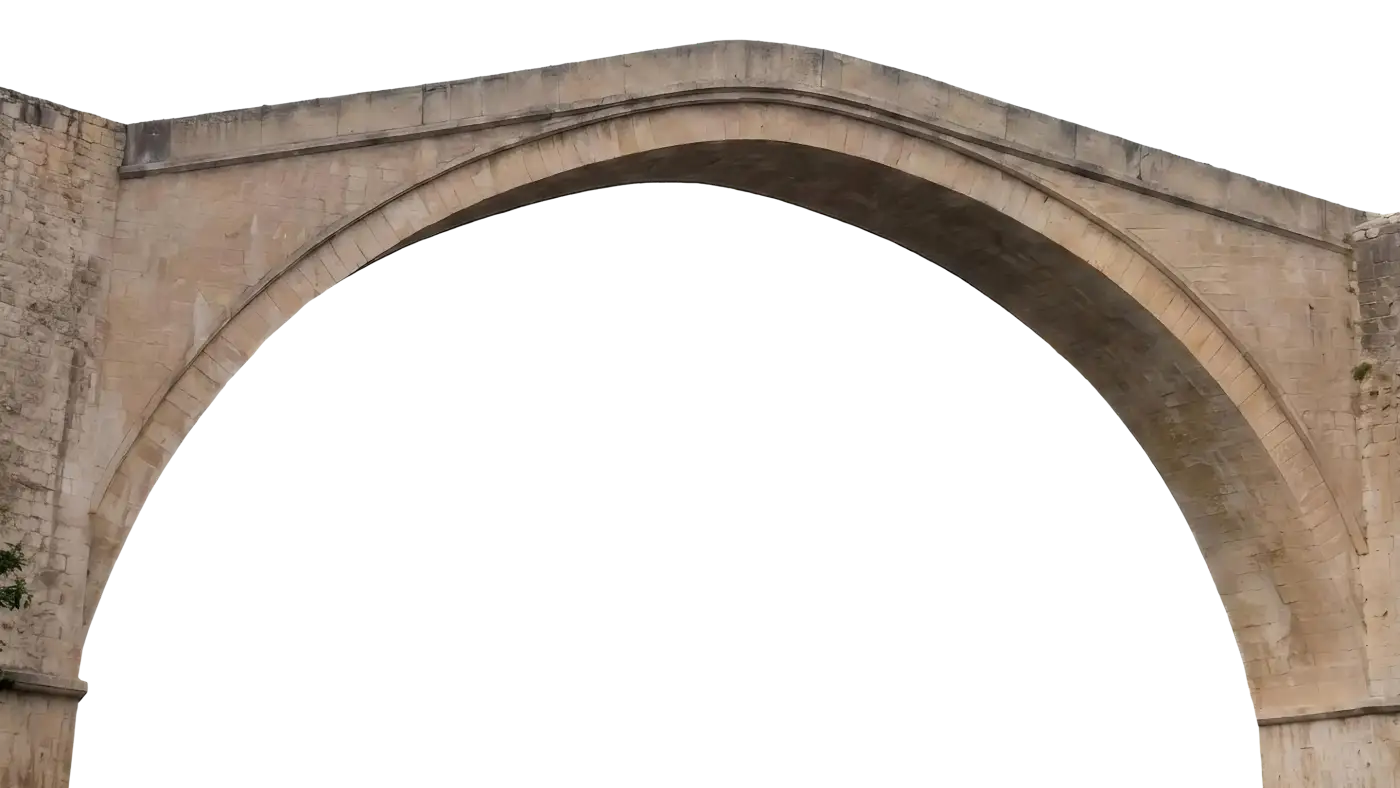
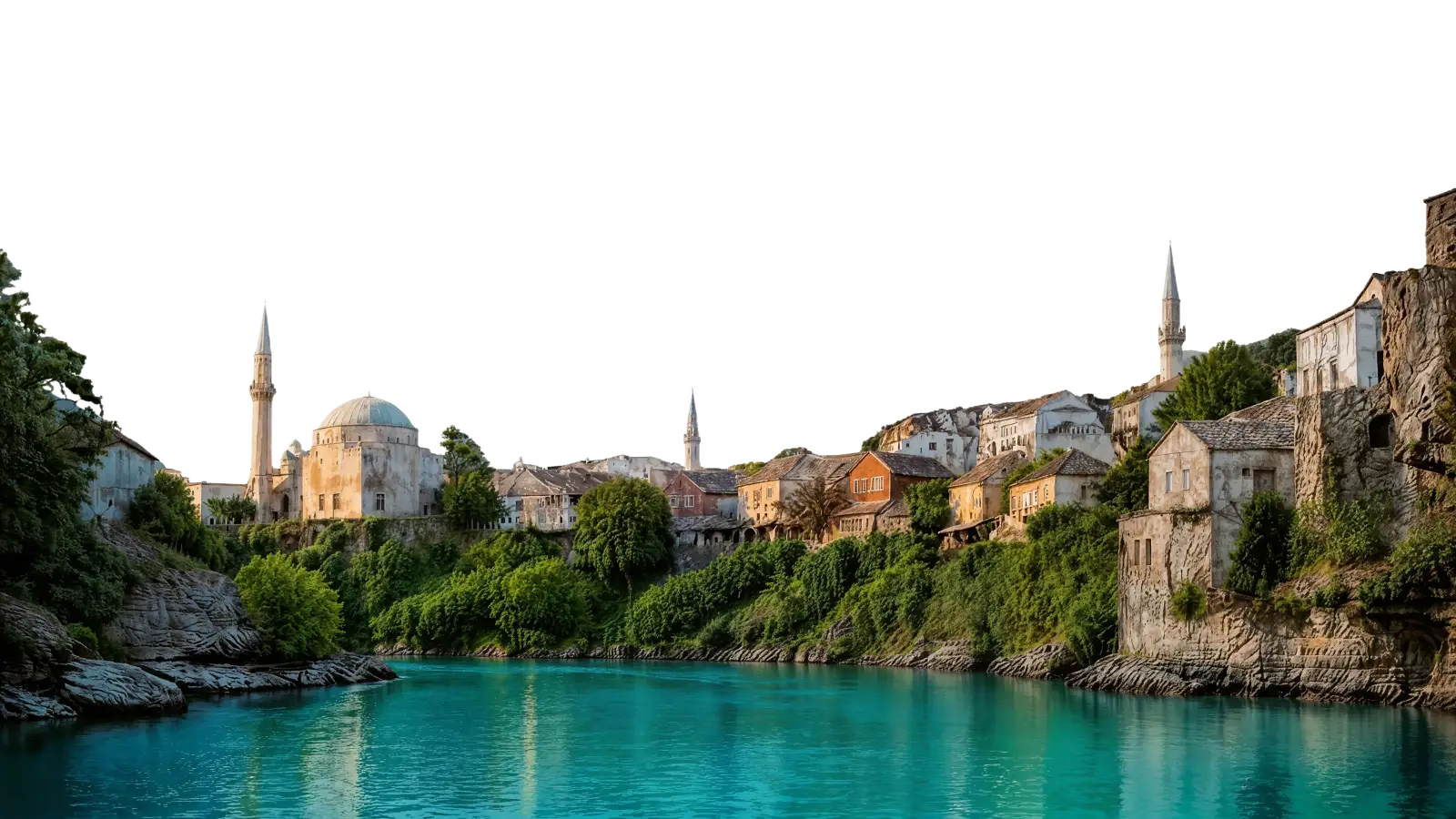
A stone arch, emerald water, and a compact old city made for slow mornings, late light, and one unforgettable crossing.
Stari Most links the banks of the Neretva and anchors a historic quarter shaped by Ottoman, Mediterranean, and European layers.
Stone lanes, mosque courtyards, copper stalls, and riverside coffee stay within a short walk of Stari Most.
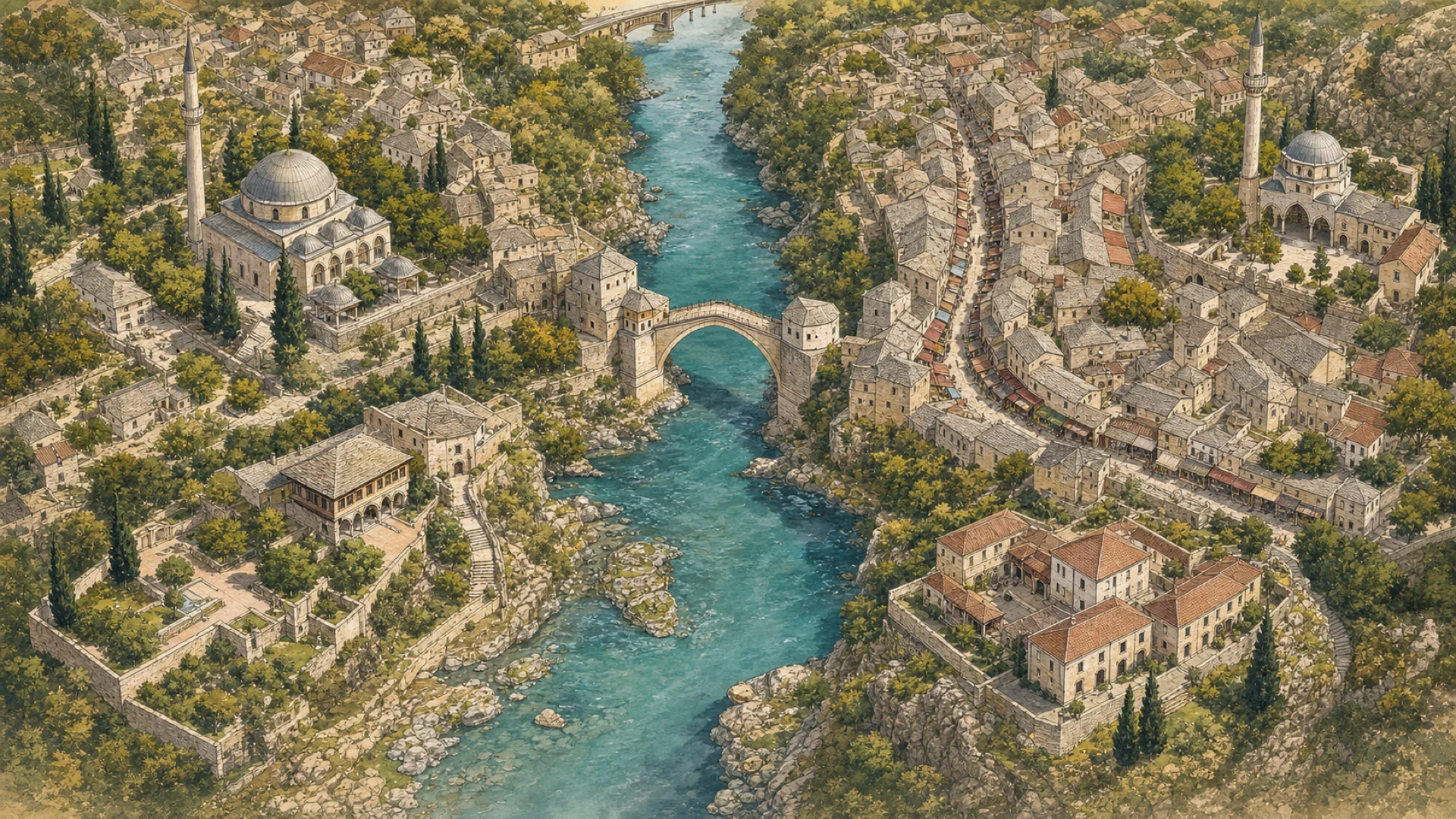
Illustrated visitor overview
Use the map to move between the places explored in this guide. It is an artistic orientation to central Mostar, not a navigation-grade street map.
Seven perspectives · one walkable city
Read Mostar through seven perspectives where landscape, architecture, commerce, domestic life, faith, and historical memory meet along the Neretva.
Old Bridge
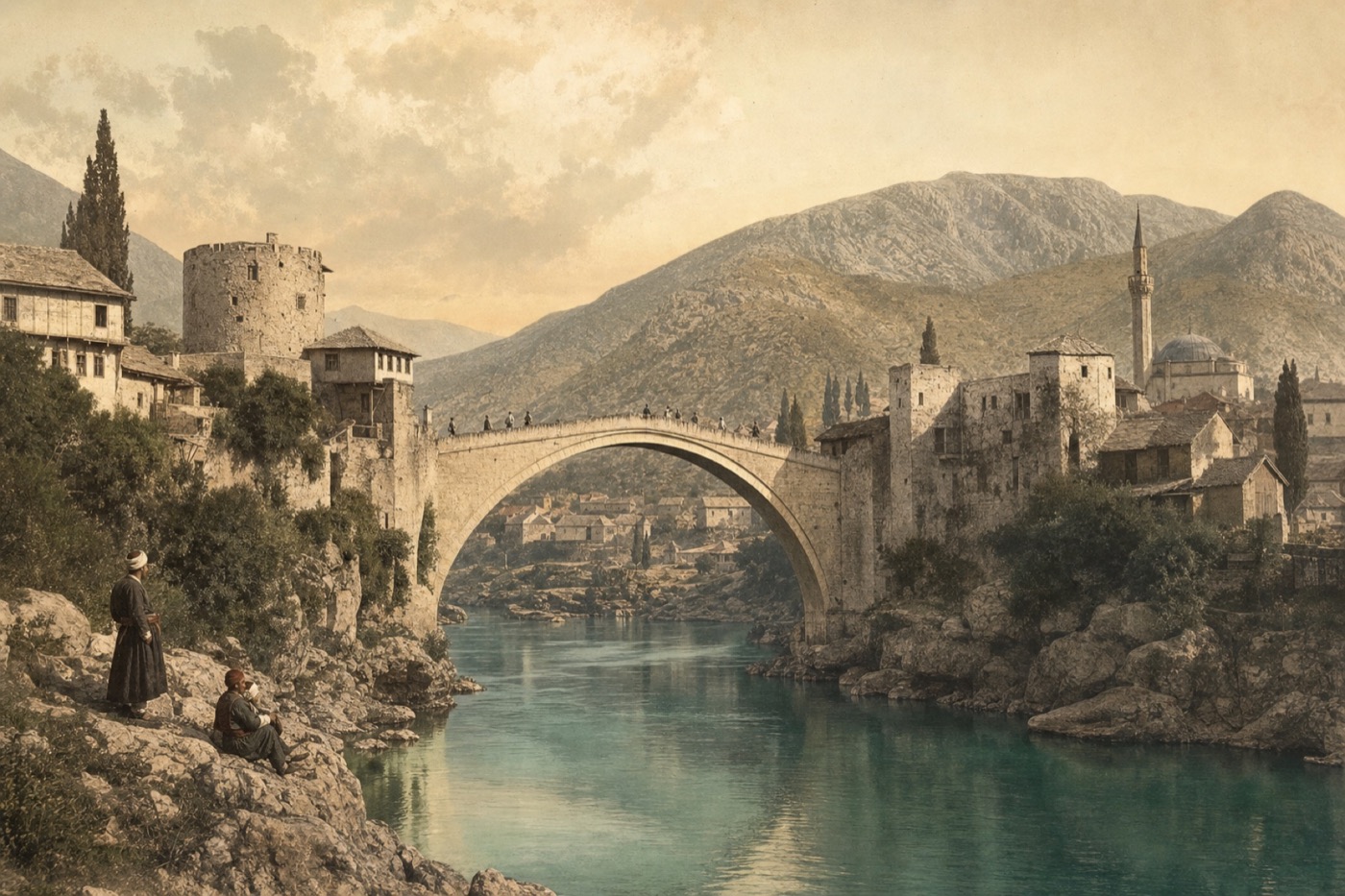
Stari Most is both an exceptional work of Ottoman engineering and the structure around which Mostar learned to recognize itself.
Mimar Hajrudin completed the bridge in 1566. Its single masonry arch joined the riverbanks with unusual economy: local stone, a steep approach, and a profile that appears to rise directly from the limestone gorge.
The bridge was destroyed on 9 November 1993 and rebuilt through an international conservation program, reopening in 2004. Its reconstruction restored the historic crossing and renewed its meaning as a symbol of connection, endurance, and coexistence.
River Landscape
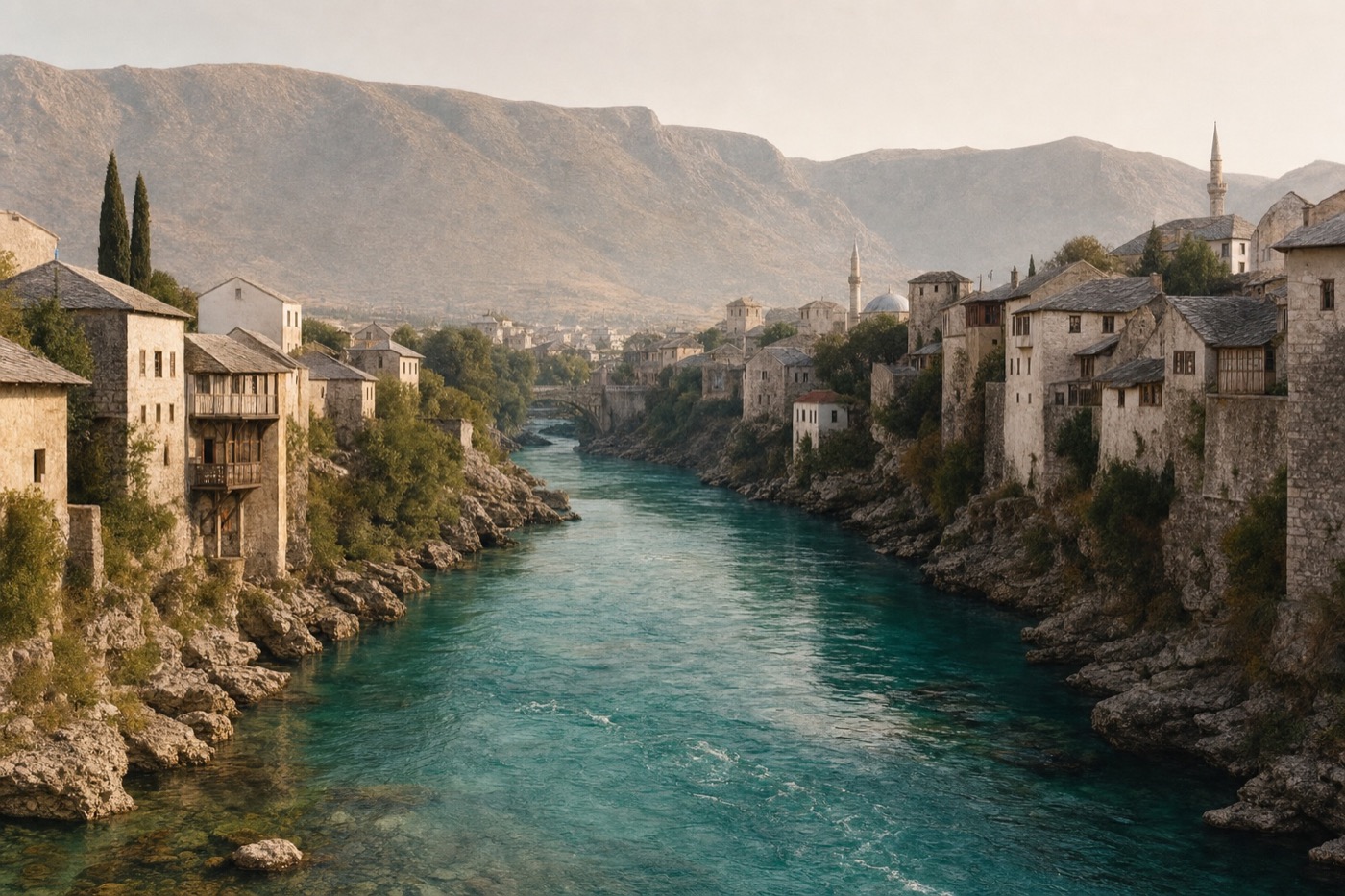
The Neretva is not simply the landscape beneath Stari Most; it is the natural corridor that gave Mostar its position, movement, and distinctive urban form.
Descending from the Dinaric Alps toward the Adriatic basin, the river cuts through a narrow valley at Mostar. Settlement gathered along its banks where routes through Herzegovina converged and where a permanent crossing could connect people, goods, and neighborhoods.
The river's changing color reflects light, depth, weather, and its limestone setting. From the old city, terraces and paths reveal how closely buildings respond to the gorge: some face the water, others rise above it, while the bridge turns the divided banks into a single civic composition.
Historic Quarter
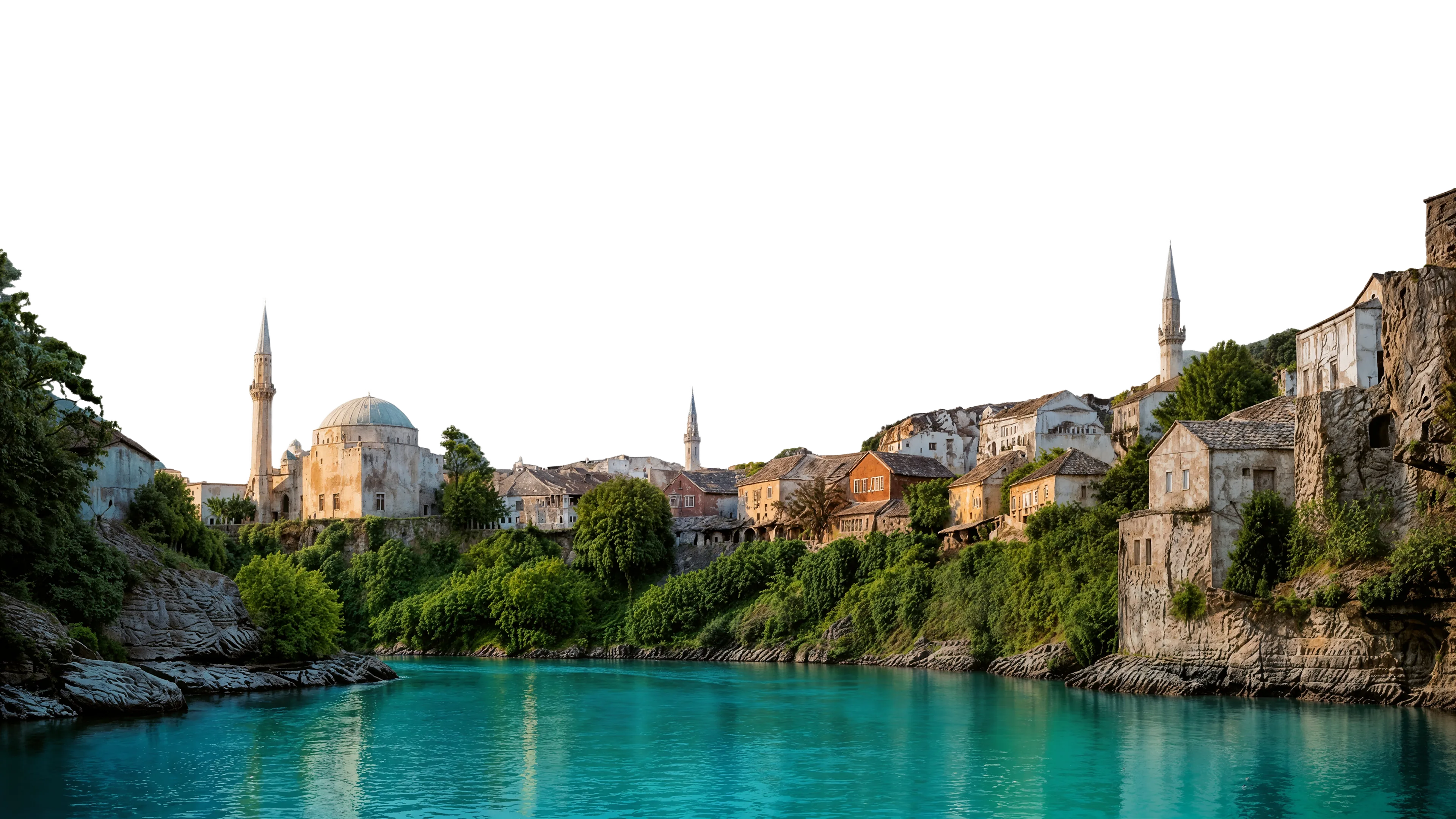
Stari Most and the surrounding old city form a single historic landscape whose meaning comes from its streets, buildings, riverbanks, and communities.
The inscribed Old Bridge Area contains an urban landscape formed over centuries. Ottoman-era lanes and religious buildings stand within a city that later absorbed Mediterranean and European influences, producing a compact historic quarter rather than a monument isolated from daily life.
After wartime destruction, reconstruction combined documentary research, archaeological evidence, recovered stone, and traditional building knowledge. The restored ensemble remains significant as a place associated with cultural encounter, rupture, reconstruction, and reconciliation.
Bazaar Street
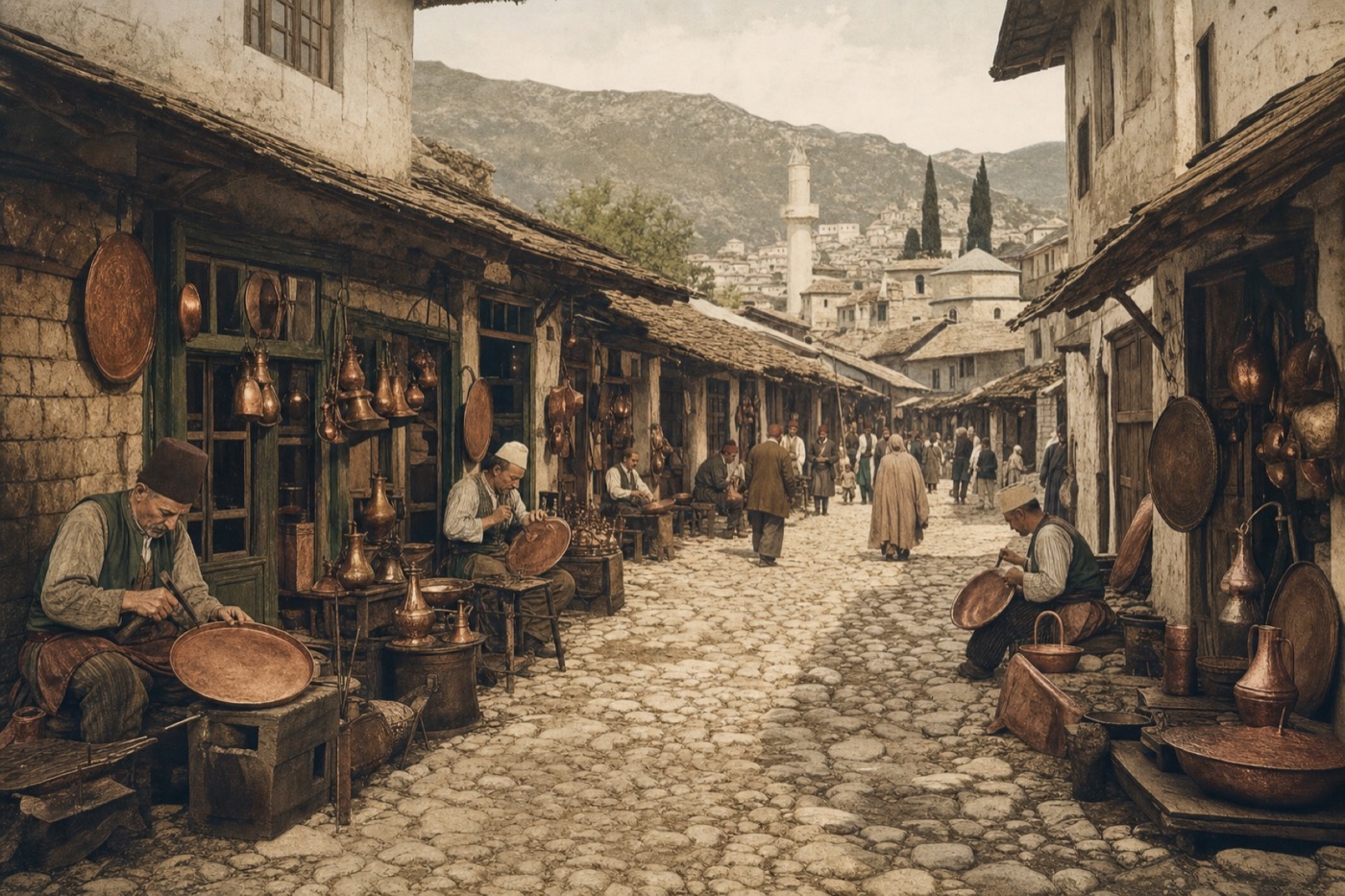
Kujundziluk preserves the scale and movement of an Ottoman commercial street, where the route to the bridge was also a place of skilled work and exchange.
The street's name is associated with the coppersmiths whose workshops shaped the bazaar's identity. Narrow frontages brought production and trade into public view, while the stone lane directed merchants, residents, and travelers toward the river crossing.
Its present character is layered rather than frozen in one period. Contemporary shops occupy an inherited urban pattern, and the most revealing details remain architectural: low eaves, irregular paving, small courtyards, and sudden openings toward the Neretva.
Viewpoint
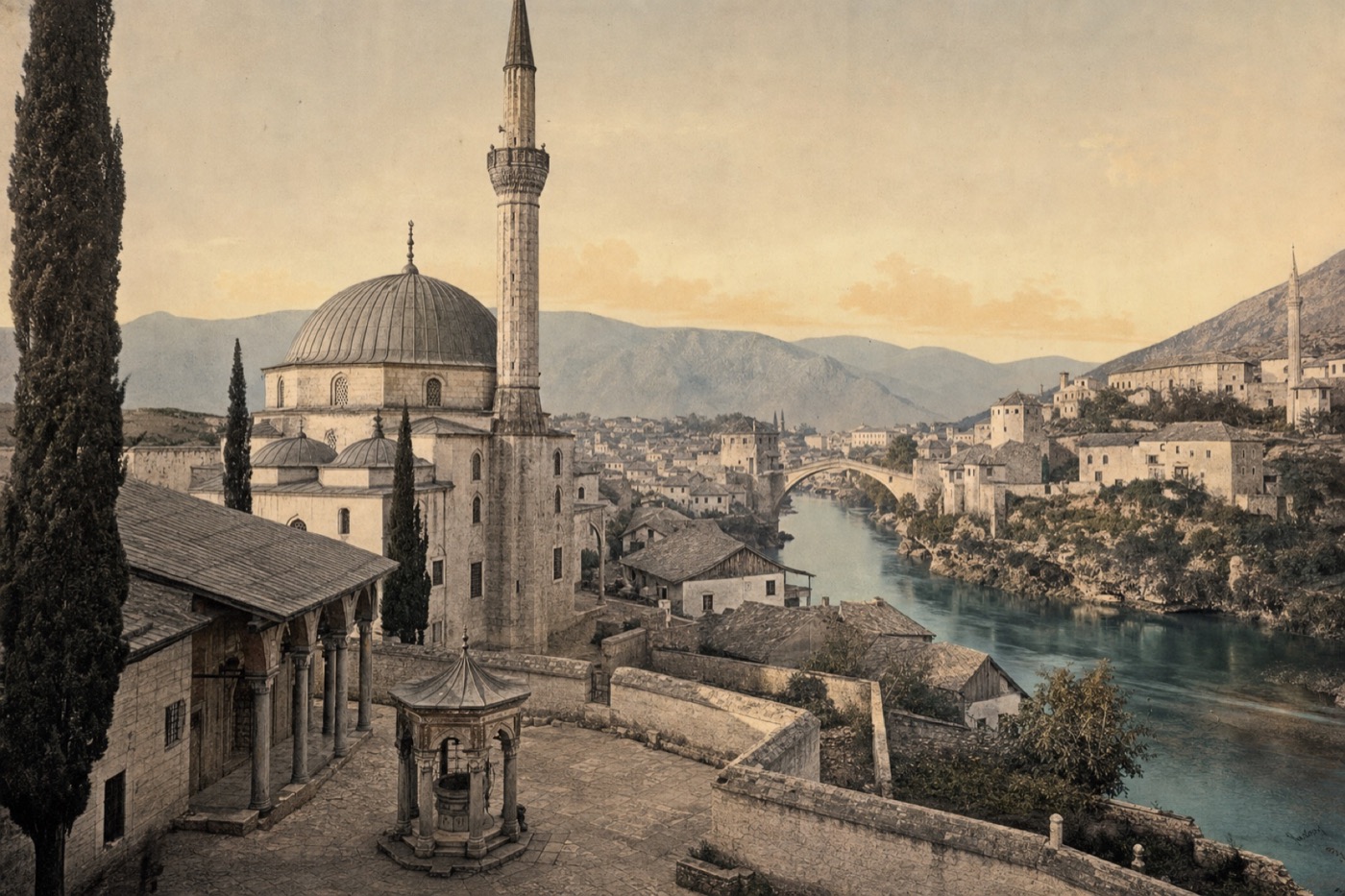
Koski Mehmed Pasha Mosque demonstrates how religious architecture, neighborhood life, and the river landscape were composed as parts of the same Ottoman city.
Dating from the early seventeenth century, the mosque occupies a compact site above the eastern bank. Its domed prayer hall and slender minaret belong to a wider ensemble of lanes, courtyards, and neighboring buildings rather than an isolated monument.
From the precinct, Mostar's geography becomes legible: roofs descend toward the Neretva, Stari Most binds the two banks, and the enclosing mountains define the narrow corridor in which the city developed.
Ottoman House
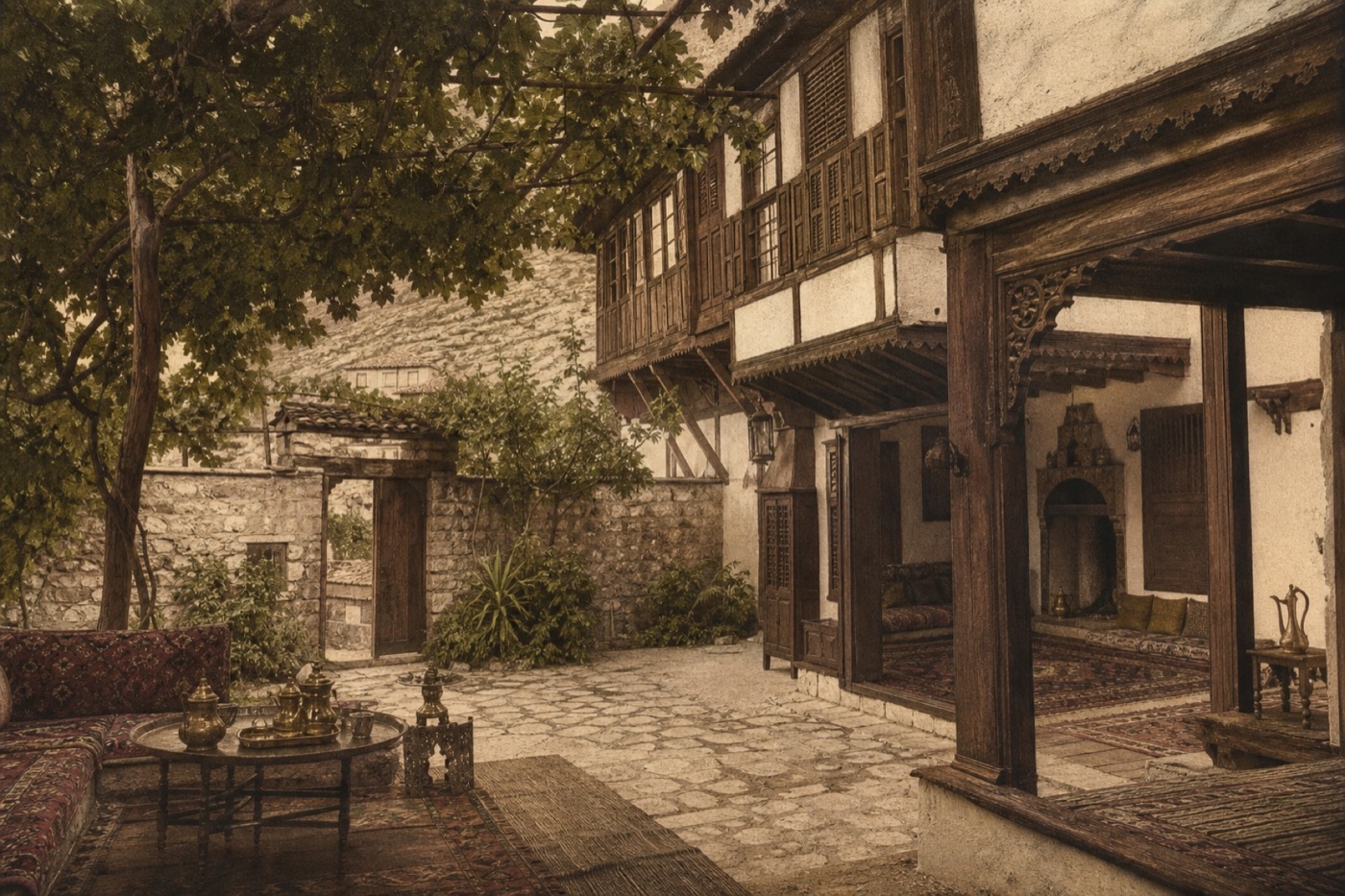
Kajtaz House shifts the historical view from public monuments to the carefully ordered spaces of an Ottoman-era household.
Stone boundary walls protect a shaded courtyard, while timber-framed upper rooms extend above the ground floor. The arrangement moderates heat, creates privacy, and organizes movement between service areas, reception rooms, and family quarters.
Carved woodwork, textiles, built-in furnishings, and low seating reveal architecture as a pattern of daily practice. The house matters not because it is grand, but because it preserves the domestic scale often missing from histories centered on rulers and monuments.
Museum
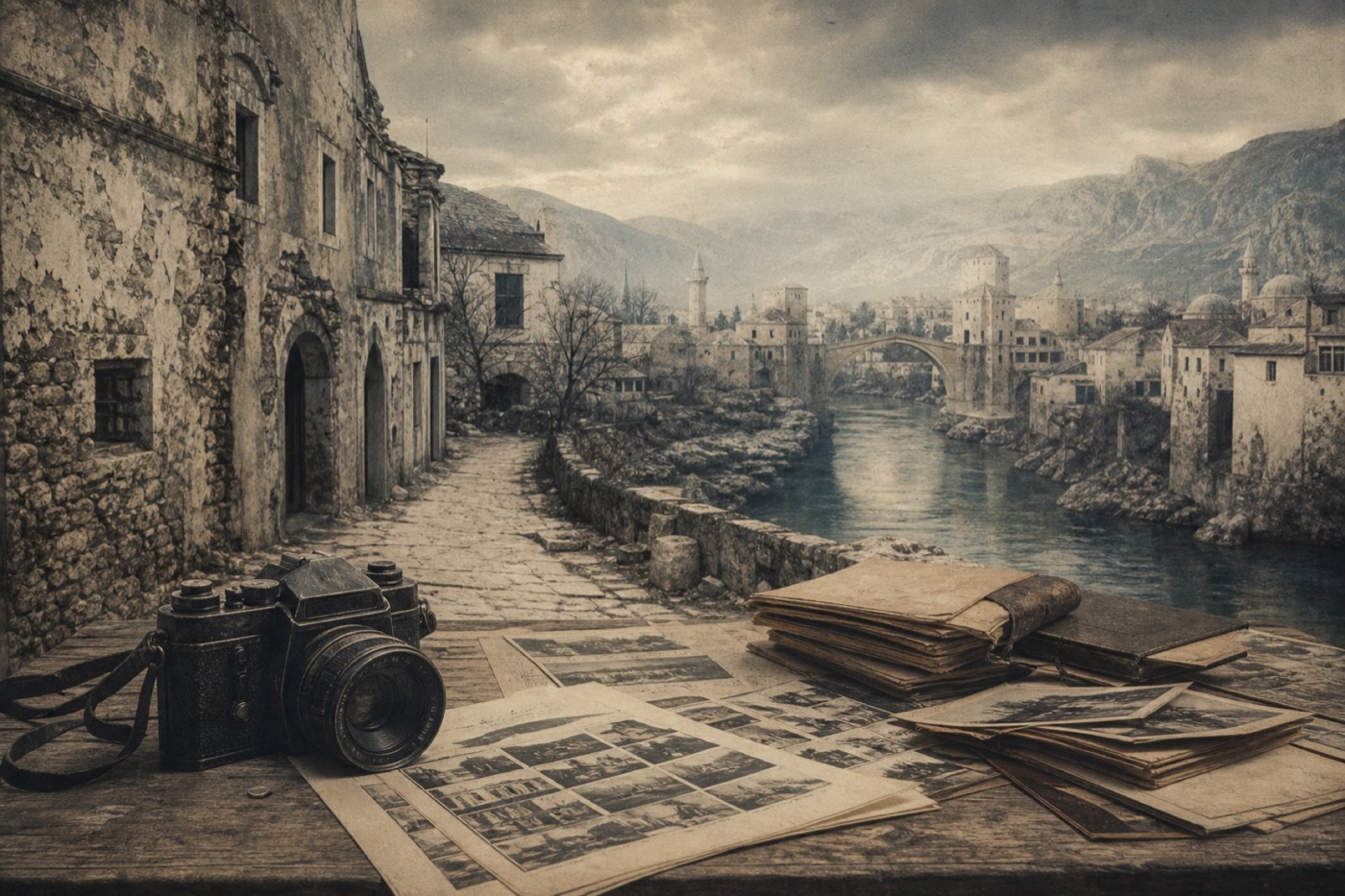
War photography returns Mostar's recent history to the scale of individual streets, damaged buildings, and the people who endured the conflict.
The exhibition should be approached as historical testimony rather than spectacle. Documentary images record what official chronologies cannot fully convey: disrupted routines, altered neighborhoods, physical destruction, and the persistence of ordinary life.
Seen after the restored old city, the photographs complicate any simple narrative of loss followed by recovery. Reconstruction repaired essential fabric, but memory remains part of the place and deserves the same attentive reading as stone, timber, and streets.
Four independent tables · beyond the obvious terraces
These smaller kitchens reward a short walk beyond the most visible menus. Details were checked against current restaurant and local listings; hours and availability can change, so confirm before setting out.
Home-style Bosnian cooking
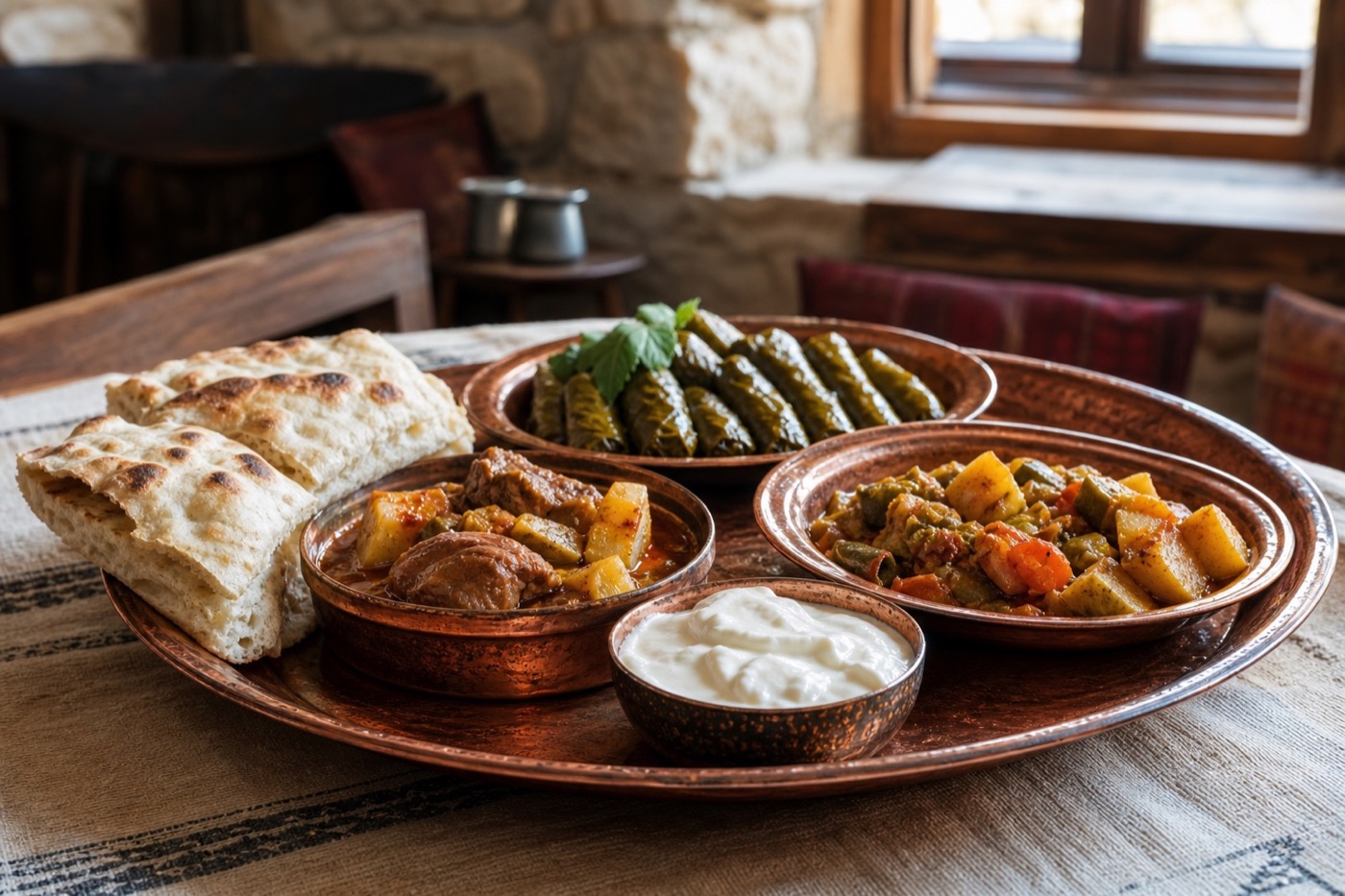
A small aščinica near Karađoz Bey Mosque, Saray is a useful counterpoint to restaurant dining: direct, comforting food built around cooked dishes and familiar local flavors.
Look first at the day's prepared dishes rather than approaching the meal as a fixed checklist. Soups, stuffed vegetables, slow-cooked meat, bread, and yogurt express the domestic logic of this style of kitchen.
Find it: Karadozbegova 3. The setting is central but tucked away from the riverfront procession, making it a practical lunch stop while exploring the eastern old city.
Neighborhood bakery
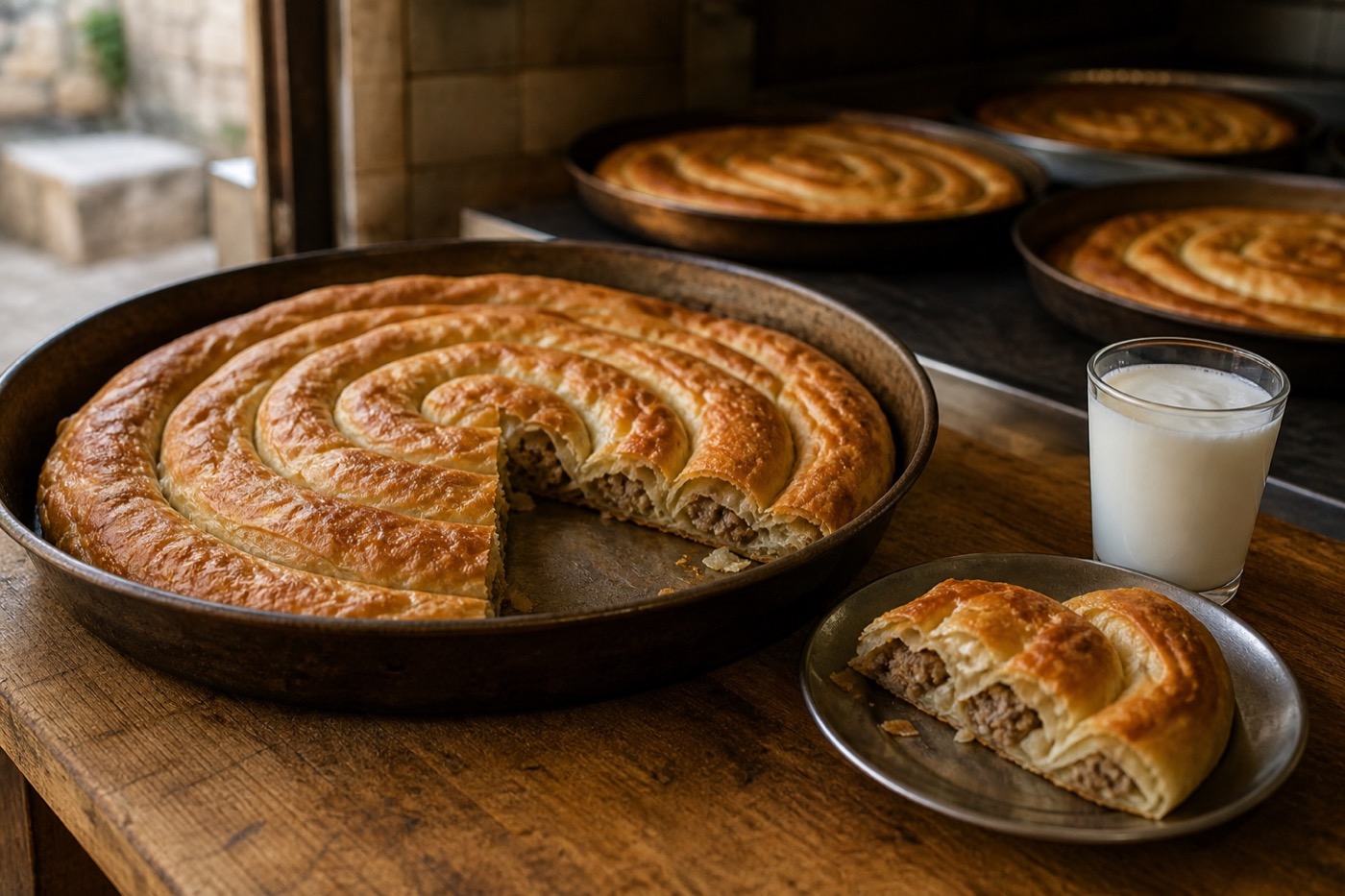
Ago is the kind of focused neighborhood address that makes one thing feel like a complete meal: hot, crisp-edged Bosnian pie with a glass of yogurt.
Burek traditionally refers to the meat-filled pie; related pitas may carry cheese, potato, or greens. The pleasure is in contrast—thin layered pastry, a savory filling, and the clean acidity of yogurt.
Find it: Kneza Domagoja 26, west of the old city. It opens early and is especially suited to breakfast or lunch; popular trays can sell through, so earlier is wiser.
Long-standing local restaurant
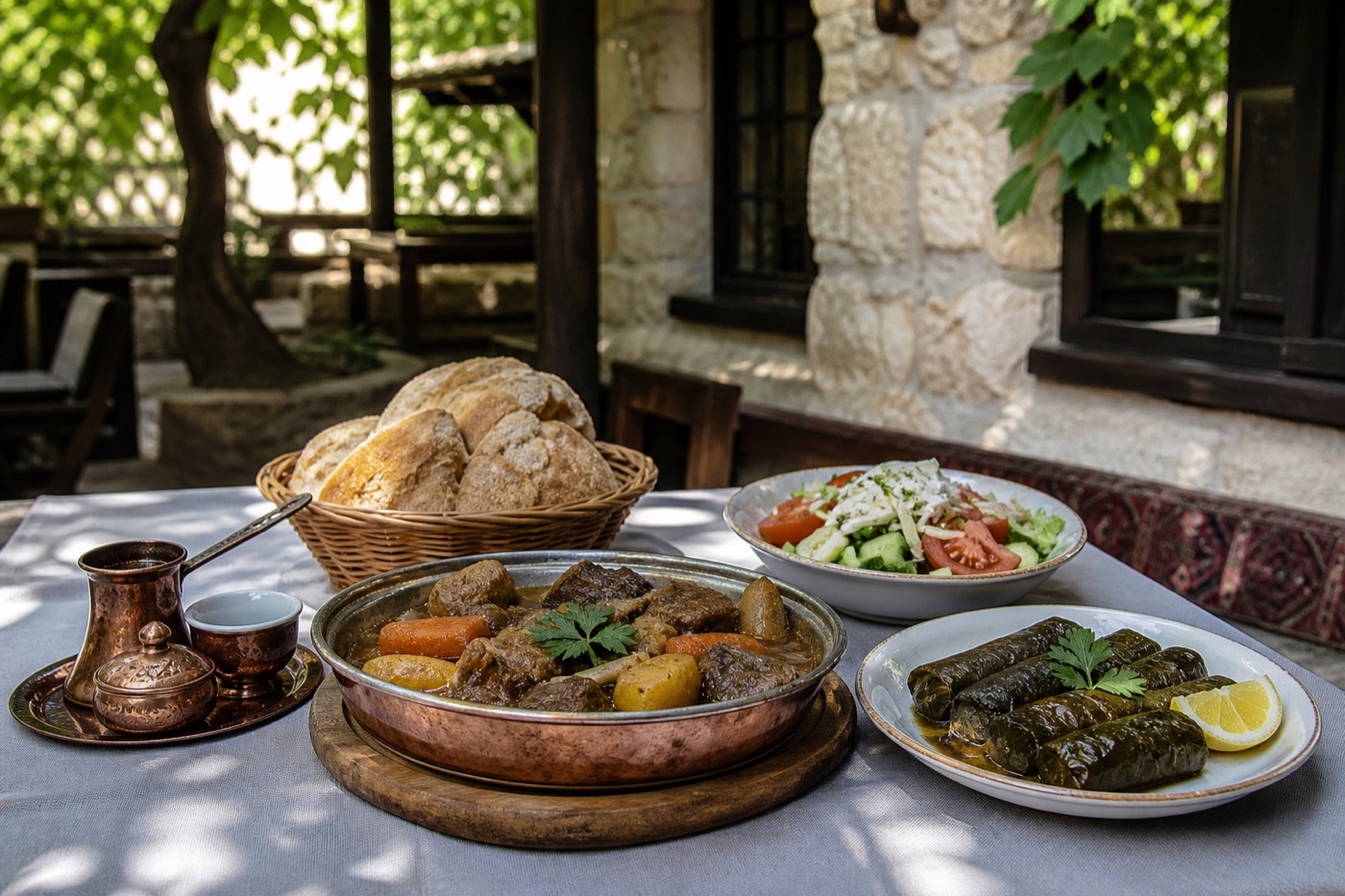
Near Musala Square rather than the bridge approaches, MM offers the breadth of a traditional restaurant used for ordinary lunches as well as a deliberate introduction to regional cooking.
The restaurant describes a history of more than thirty years and a commitment to older recipes. Daily dishes are the interesting route: ask what has been cooked that day before defaulting to the grill.
Find it: Mostarskog Bataljona 11, opposite Hotel Bristol. Its location makes it a natural stop between the railway or bus area and the historic center.
Family-run old-town grill
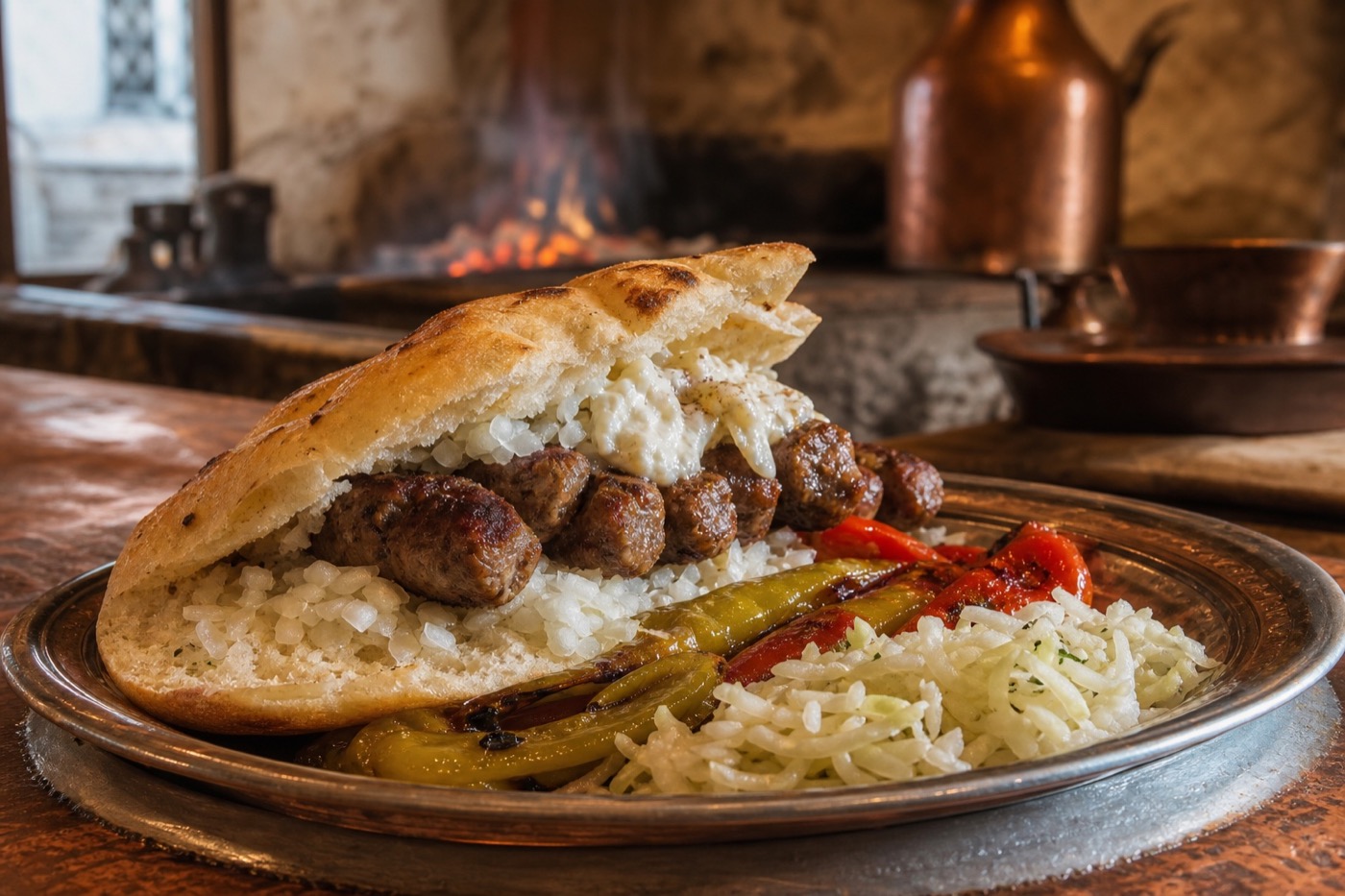
Tima-Irma is compact, family-run, and centered on the grill—a good place to understand why ćevapi, somun, onion, and kajmak need little embellishment.
The family business describes more than thirty years of operation. Beyond ćevapi, the grill may include pljeskavica, sudžukice, skewers, mixed meat, and simple salads.
Find it: Onešćukova bb in the old town. Its reputation means it is no longer secret, but the scale and focused menu still make it feel more personal than a broad tourist terrace.